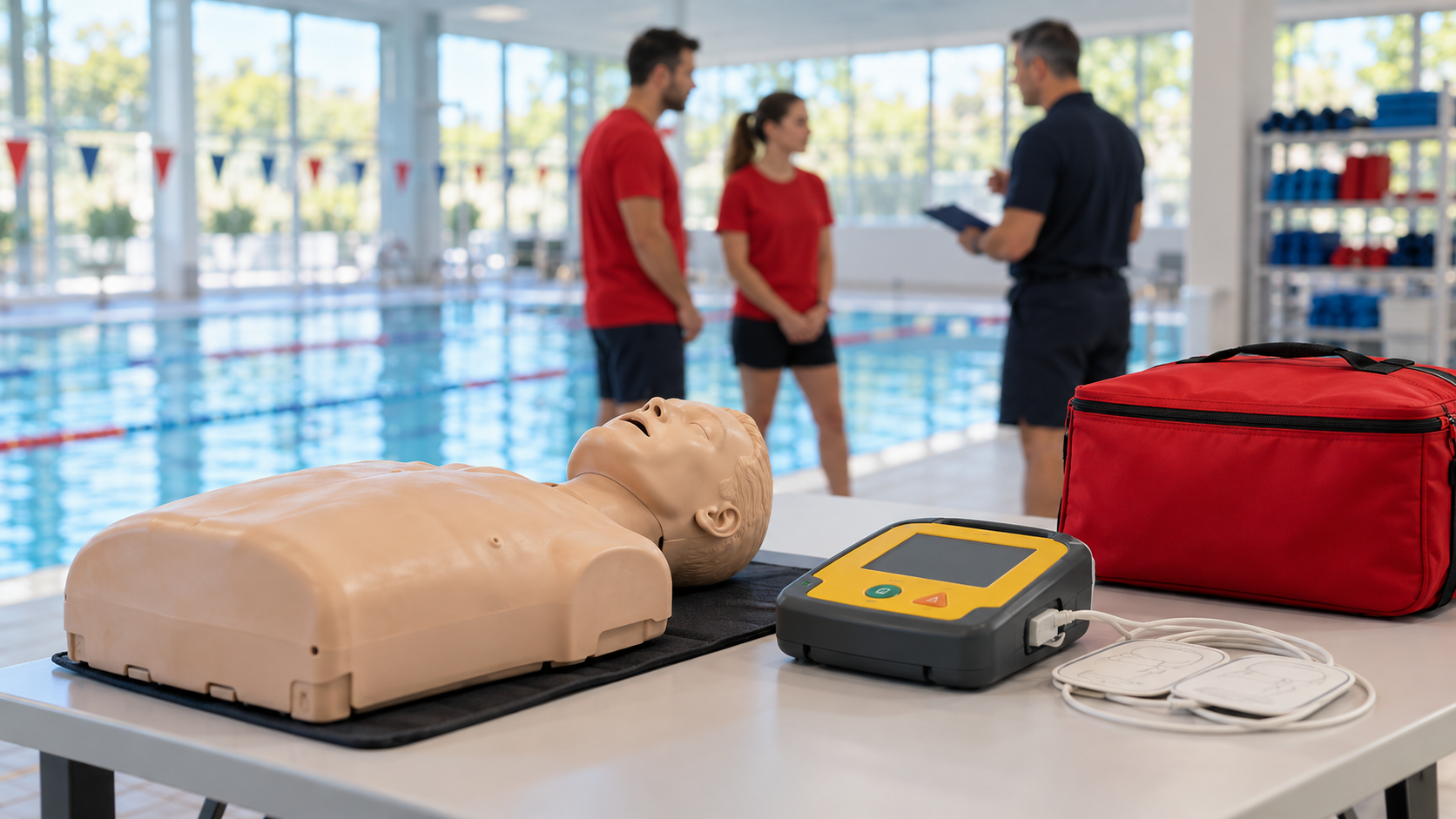
Aquatic safety planning includes preparing for situations beyond the water. CPR, AED awareness, and first aid are important topics to discuss when choosing training for a lifeguard role. The goal is to understand what instruction you need and how it fits the responsibilities of your workplace.
Ask what your course includes
Check whether CPR, AED, and first aid are included in the program you are considering or require separate enrollment. Ask which assessments are involved, how practical skills are evaluated, and what documentation you receive after successful completion. Confirm the employer’s requirements directly instead of relying only on a course title.
Connect training with facility procedures
Once you join a pool or aquatic team, ask how emergency procedures are explained during orientation. Find out who coordinates staff practice, where relevant equipment is kept, and how concerns about equipment or procedures should be reported. Your supervisor should explain the responsibilities assigned to your role.
Keep your training records organised and note the renewal dates shown on your certificates. Ask the provider or employer when you should plan refresher training. Regular opportunities to review skills with an instructor can help you identify questions and address gaps in your preparation.
Choose a practical next step
Visit AmericanLifeguard.com and AmericanLifeguardAssociation.com for information about related training. Contact the provider for current details. This article is a planning overview, not instructions for performing CPR, using an AED, or providing first aid.